
PWM Trading PlatformGoldman Sachs Private Wealth Management was expanding its digital experience to give clients more flexibility to place and manage their own trades across asset classes.
Roles & Responsibilities.
As one of three product designers, I helped refine PWM’s equity trading experience through trader research, interaction design, and high-fidelity prototyping across desktop and mobile.
Researching client control
I interviewed Goldman Sachs traders to understand where clients needed more flexibility and where clear boundaries should remain.
Refining the trading experience
I translated those insights into clearer interaction patterns, improving order entry, review, validation, restrictions, and status across the experience.
From concept to prototype
I built high-fidelity desktop and mobile prototypes to align cross-functional teams.
Duration
2020 - 2021 ( ~1 year)
Team
PWM design team | Traders | Legal | Engineering
Tool
Figma | Jira
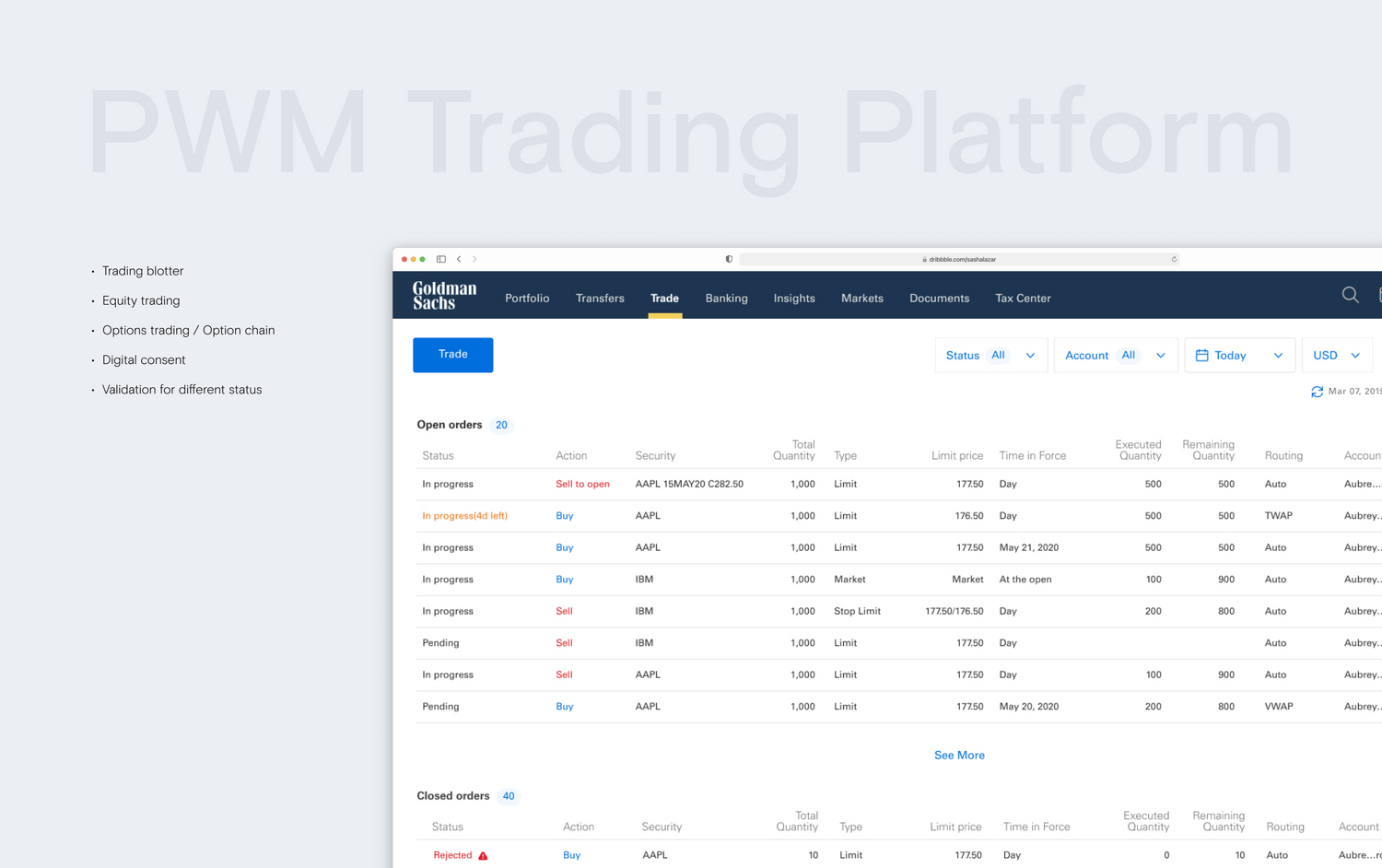
The Challenge
Private Wealth Management clients wanted more flexibility to act on their own. But their wealth was still actively managed by Goldman Sachs teams. That made the product fundamentally different from a fully self-directed brokerage experience.
The challenge was finding the right balance between client autonomy and advisor-led wealth management.
Understanding the boundary
How might we give clients more trading flexibility without making PWM fully self-directed?
To better understand that boundary, we interviewed Goldman Sachs traders who worked closely with PWM clients.
What should clients be able to control on their own?
Where did they still need guidance or restrictions?
What information would help them make decisions with confidence?
The interviews showed that clients wanted more flexibility, while traders wanted that flexibility to stay within clear boundaries. The opportunity was to expand client autonomy without adding unnecessary complexity or risk.
01
Give clients meaningful control
Let clients manage common trading decisions without exposing every possible action.
02
Make boundaries clear
Make account, eligibility, and trading boundaries easy to understand when they affect a trade.
03
Show complexity when needed
Surface rules, validation, and guidance at the moment they become relevant.
The Solution
A clearer trading experience that balanced client access with defined boundaries. Trader insights helped shape what clients could see and control, while the redesigned flow made trading more self-directed, visually structured, and easier to navigate.
More control didn’t mean every control.
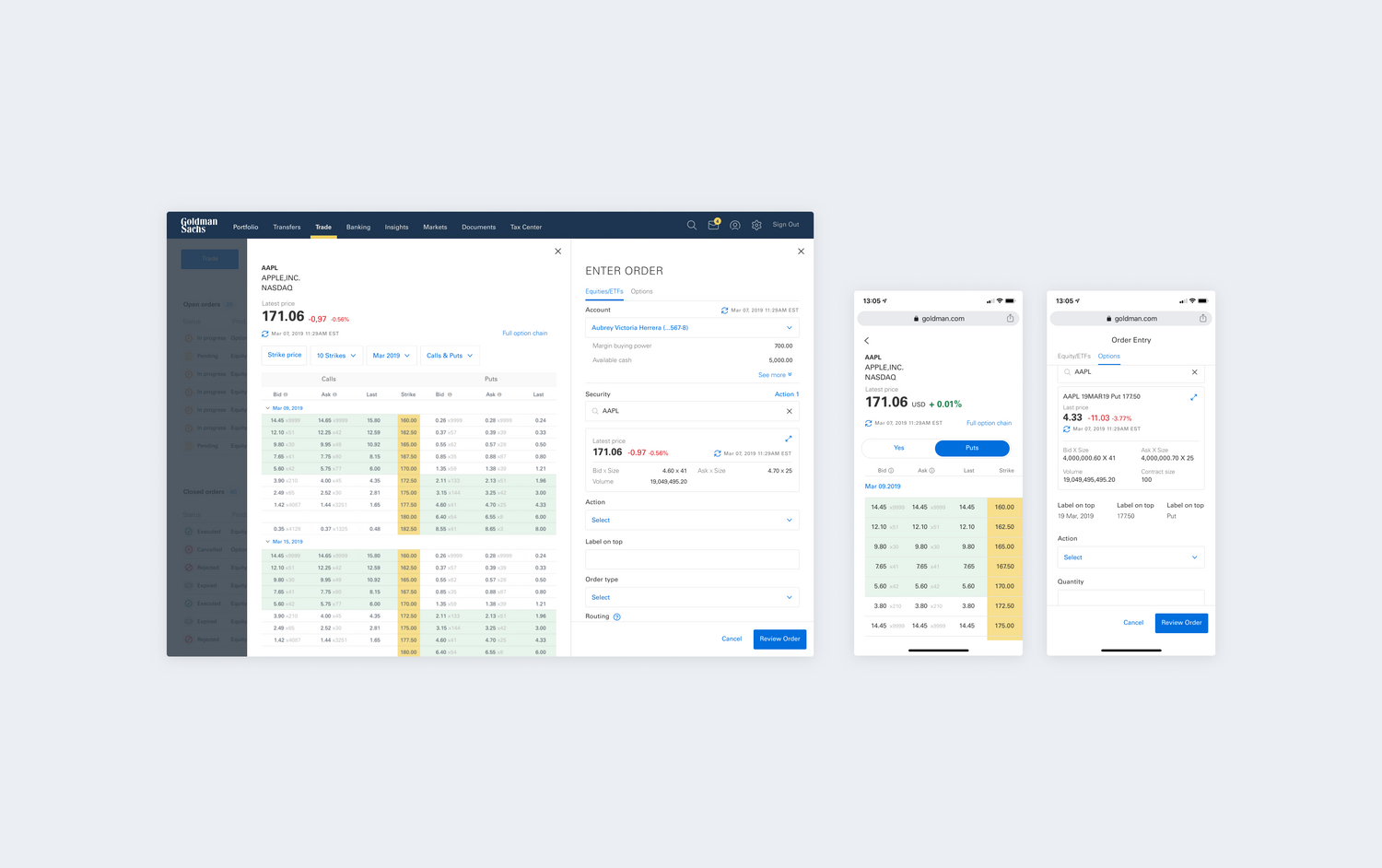
Trader interviews helped us define which parts of the equity trading experience clients could reasonably manage on their own. I focused the order flow on the decisions that mattered most.
Eligible account & security: surface only the options available to that client.
Core trade decisions: action, quantity, order type, timing, and routing.
Trading boundaries: account eligibility and product rules still shaped what was available.
01
What should clients actually be able to control?
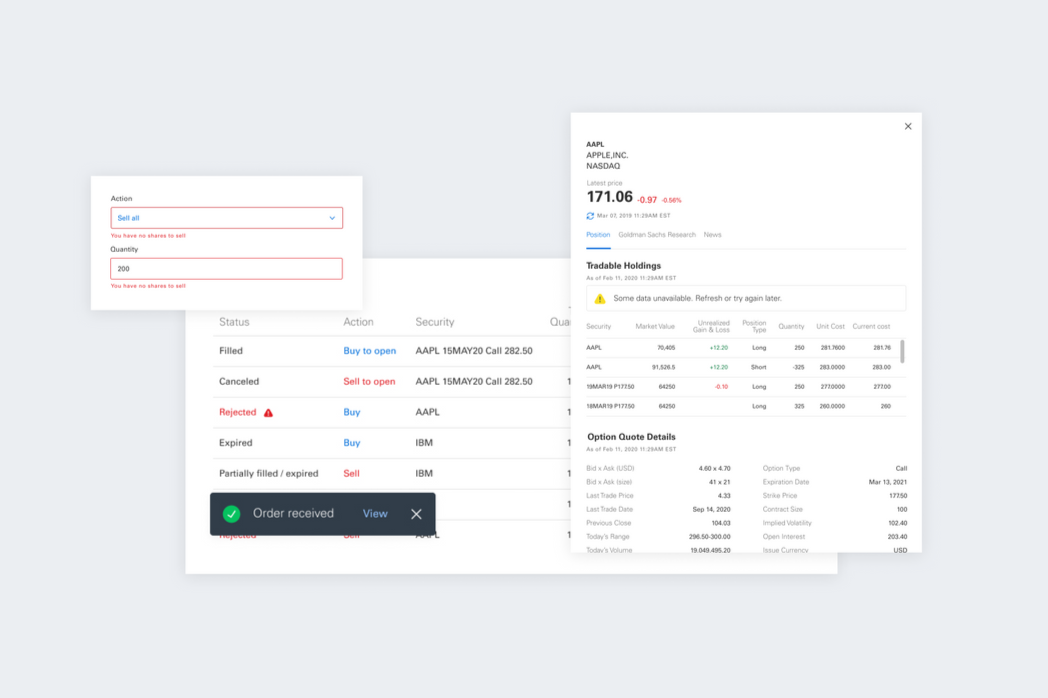
A boundary should explain itself.
Trading availability could change based on the account, position, security, or order setup. I used validation and contextual messaging to explain those boundaries at the moment they affected the trade.
Eligibility: show when an account or action wasn’t available.
Validation: explain what needed to change before continuing.
Guidance: clarify why a boundary appeared and what to do next.
02
How should the experience communicate its boundaries?
Clear boundaries, not hidden rules
Clients could understand what changed, why it changed, and what to do next
03
Show complexity only when it becames relevant.
Trading required a lot of supporting information: holdings, pricing, market data, buying power, order details, and account context.
Rather than giving everything equal weight, I organized the experience around the current decision, keeping supporting information nearby without letting it compete with the active trade.
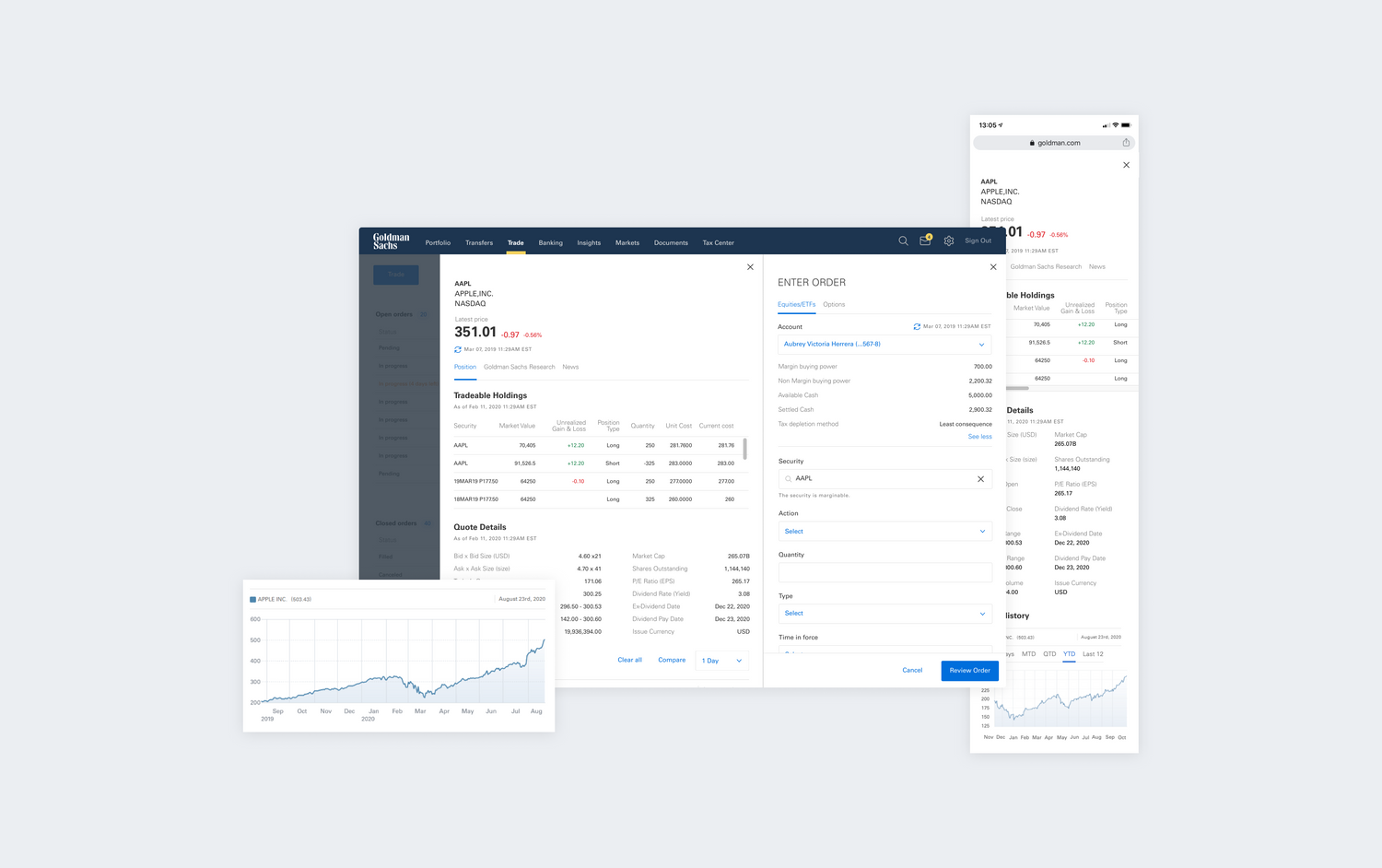
Less noise, clear priority
The goal wasn’t to remove information, but to surface it at the right moment.
04
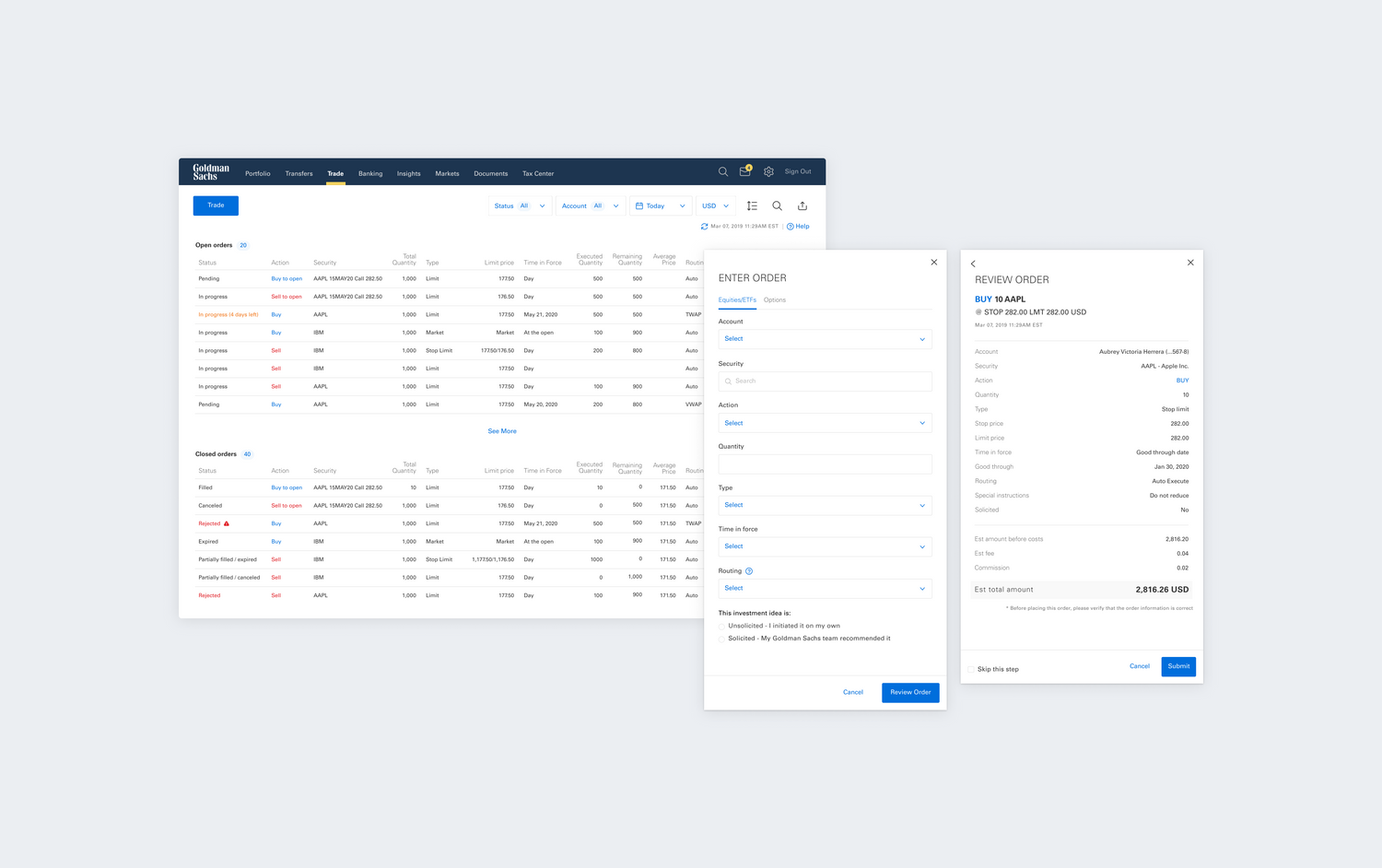
Creating visual clarity across review, confirmation, and order status.
Before submission, clients needed one clear review step to verify the trade. After submitting, the experience had to explain what happened next , including that the order had been received, was being reviewed by the trading team, and could move through different states over time.
Review: bring the key trade details together before the client commits.
Confirmation: use clear feedback to confirm the order was submitted and is now under review.
Order status: organize the information clients need after submission into a clear table, including status, timing, trade details, and any next steps.
05
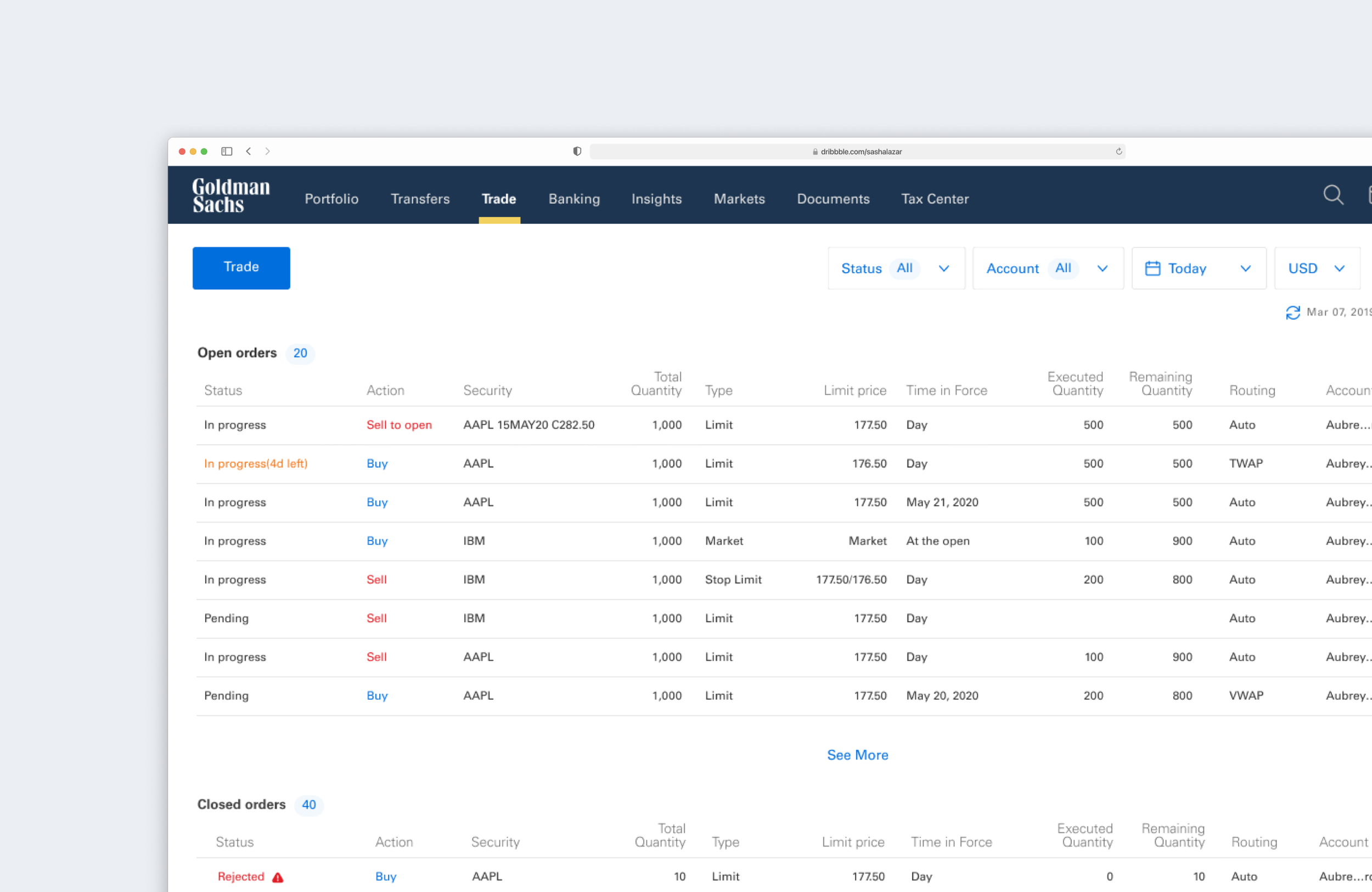
The order table became the source of truth after submission.
Once a trade was submitted, clients needed to quickly understand what they had placed, where the order stood, and whether anything required attention. We designed the table to bring trade details and execution status together without overwhelming the client.
Key trade details and execution status came together in one scannable view.
Final Outcome
We completed the end-to-end equity trading experience and received strong feedback from Goldman Sachs clients. The final designs and prototypes also supported engineering implementation before my engagement ended.
Clearer flows, validation, and order-status patterns made the experience easier to understand and helped reduce unnecessary back-and-forth around routine trading issues.
Strong Client Feedback
Positive feedback from Goldman Sachs clients on the redesigned trading experience.
End-to-End Equity Flow
Completed the full equity trading journey across order entry, review, validation, submission, and status.
Clearer Self-Service
Validation and clearer status patterns helped clients resolve common trading issues with less manual follow-up.