PWM Design System
Creating a more consistent and scalable design system for Goldman Sachs Private Wealth Management.
Intro
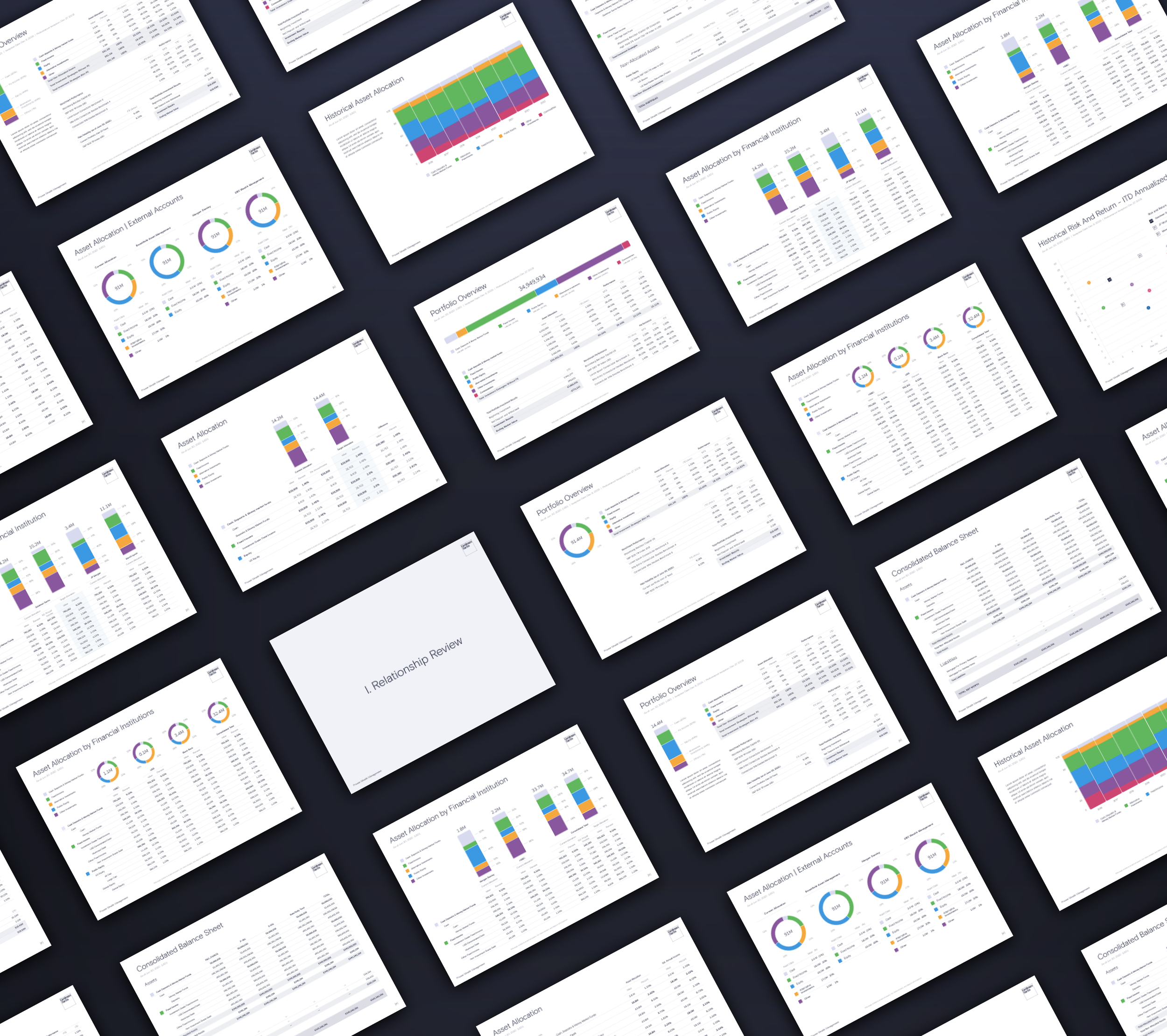
Goldman Sachs PWM was evolving toward a more modern and consistent digital experience, but existing products had grown across different patterns, styles, and implementation approaches.
As a designer, I helped evolve the PWM design system through a new Atomic Design approach, creating a more structured and reusable system from foundations to components and larger product patterns.
Role
UX/UI Designer
Duration
Around 1 year
Team
PWM design team, Product teams, Developers
Challenge
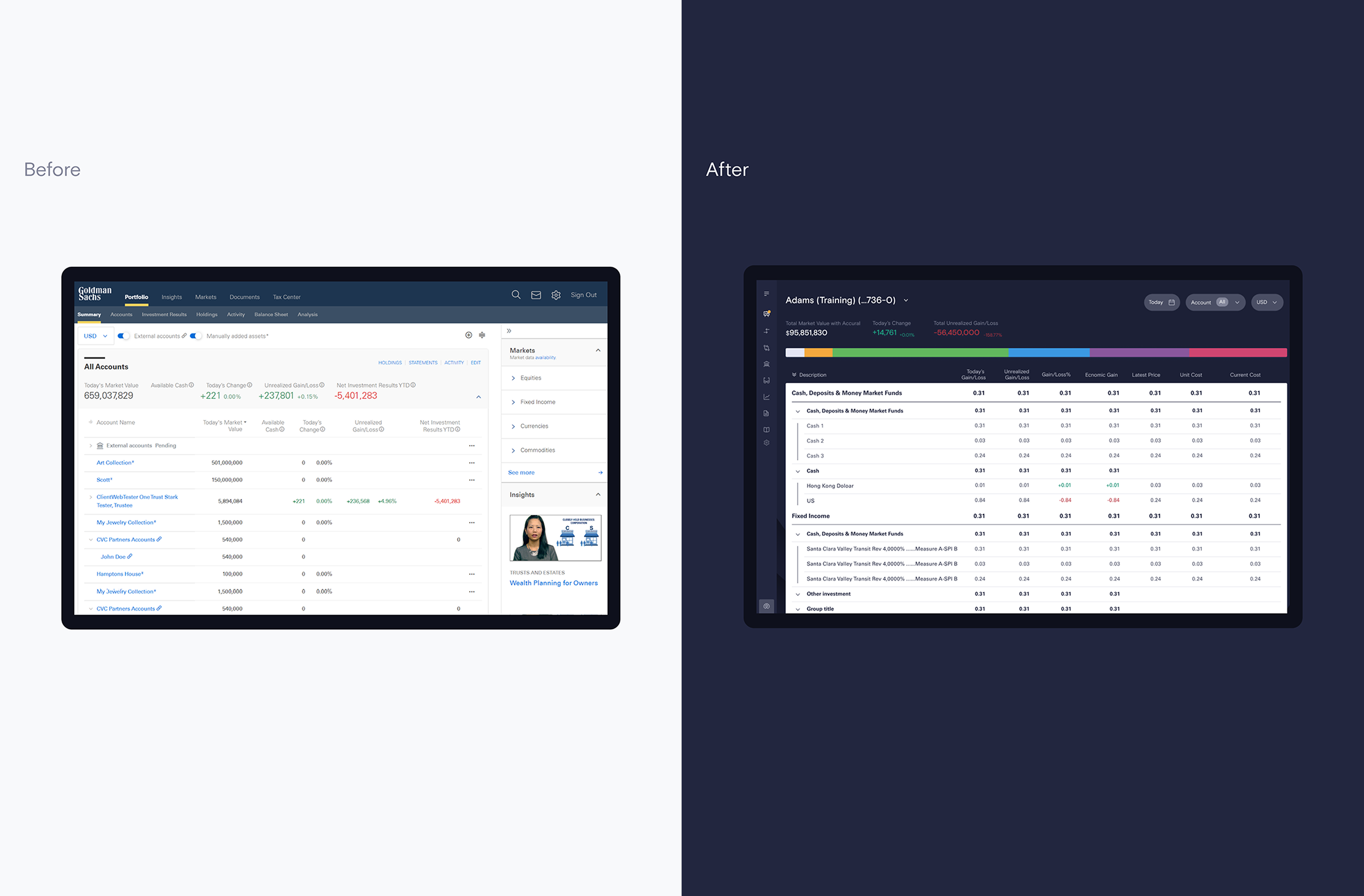
Bringing consistency to complex experiences
Different products and use cases had developed their own visual patterns over time, creating inconsistencies across the experience.
The challenge was to create a clearer visual language while keeping the system flexible enough to support complex financial content and workflows.
Design Solution
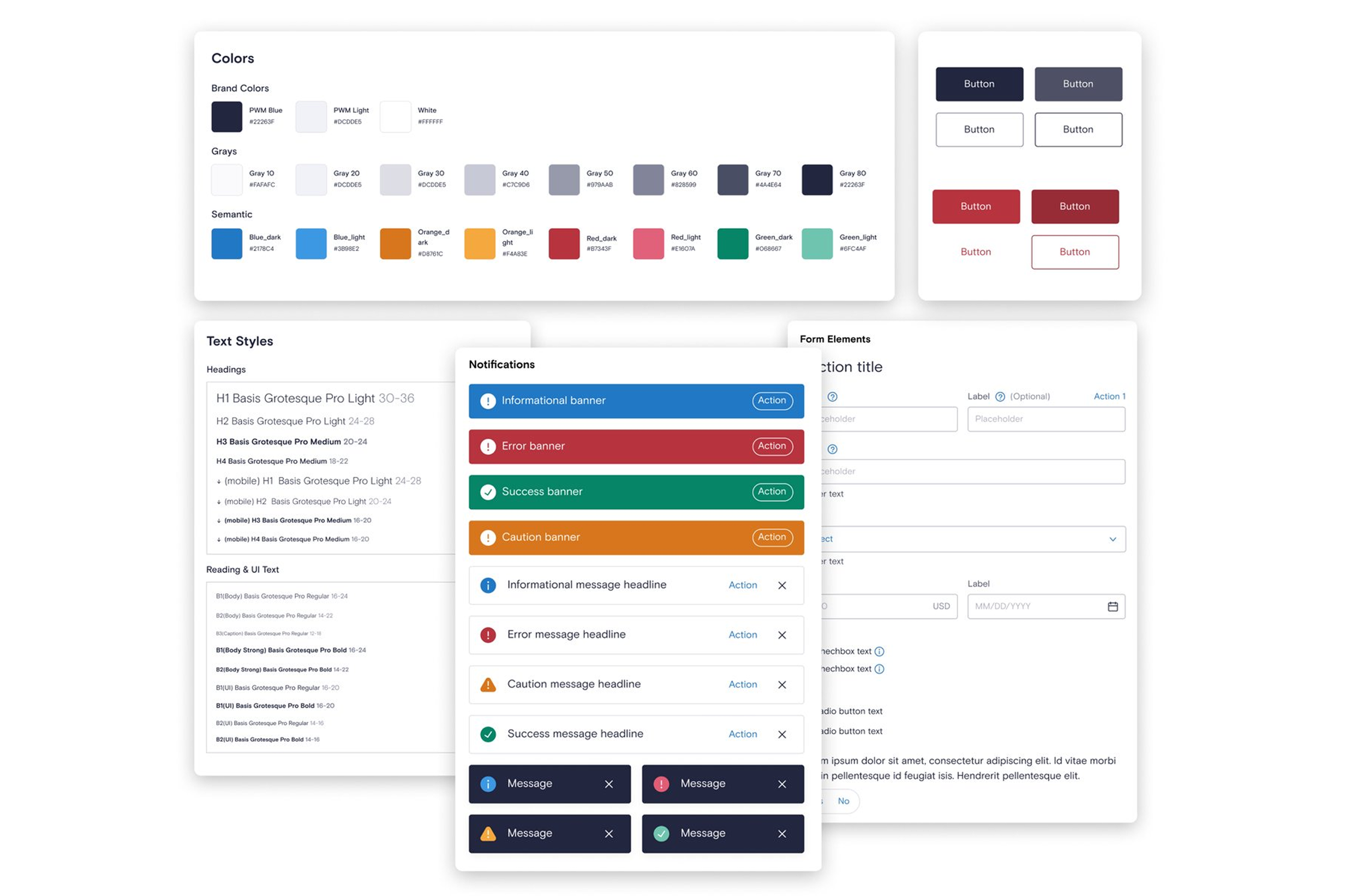
1.Building the foundation
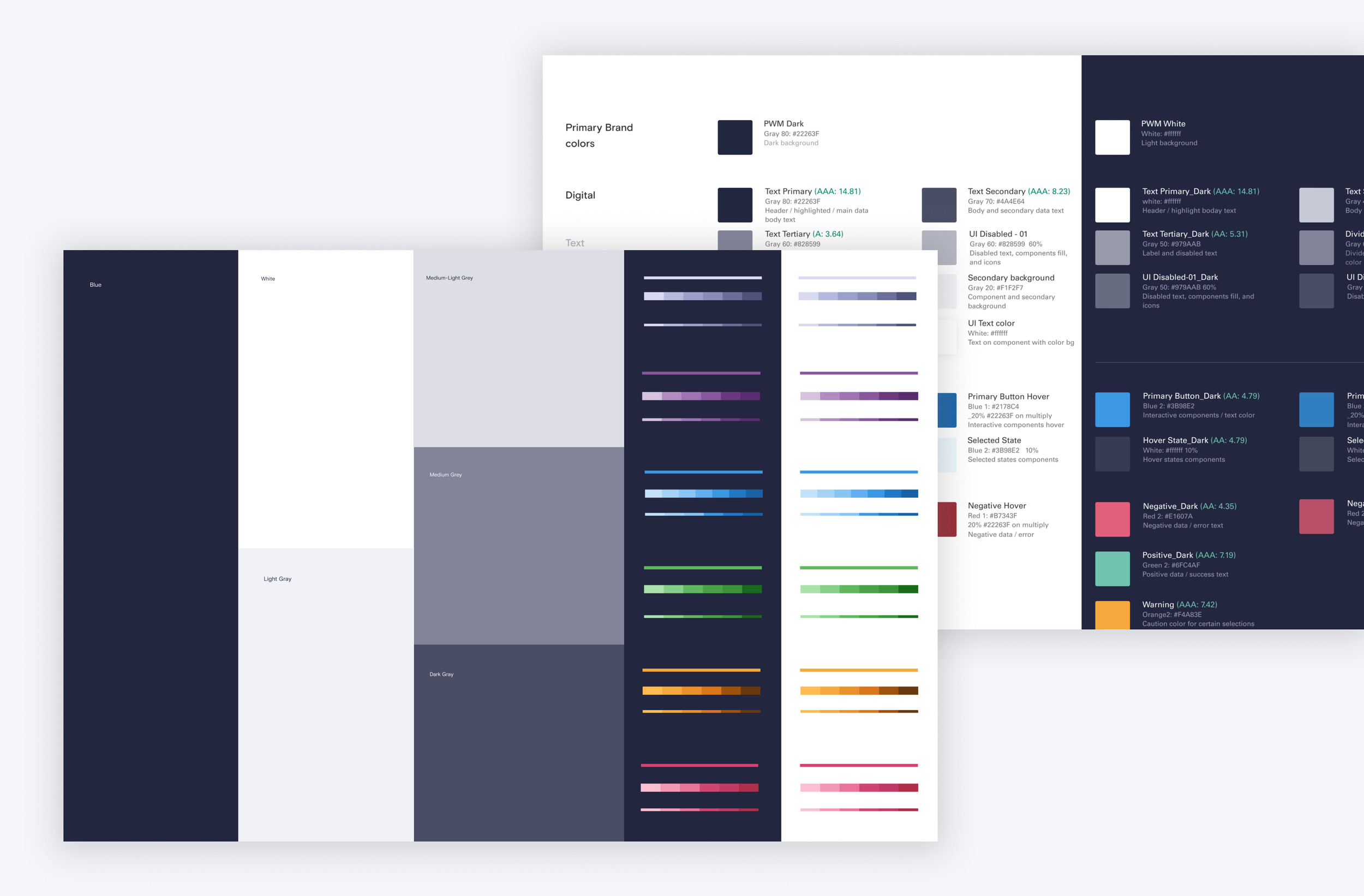
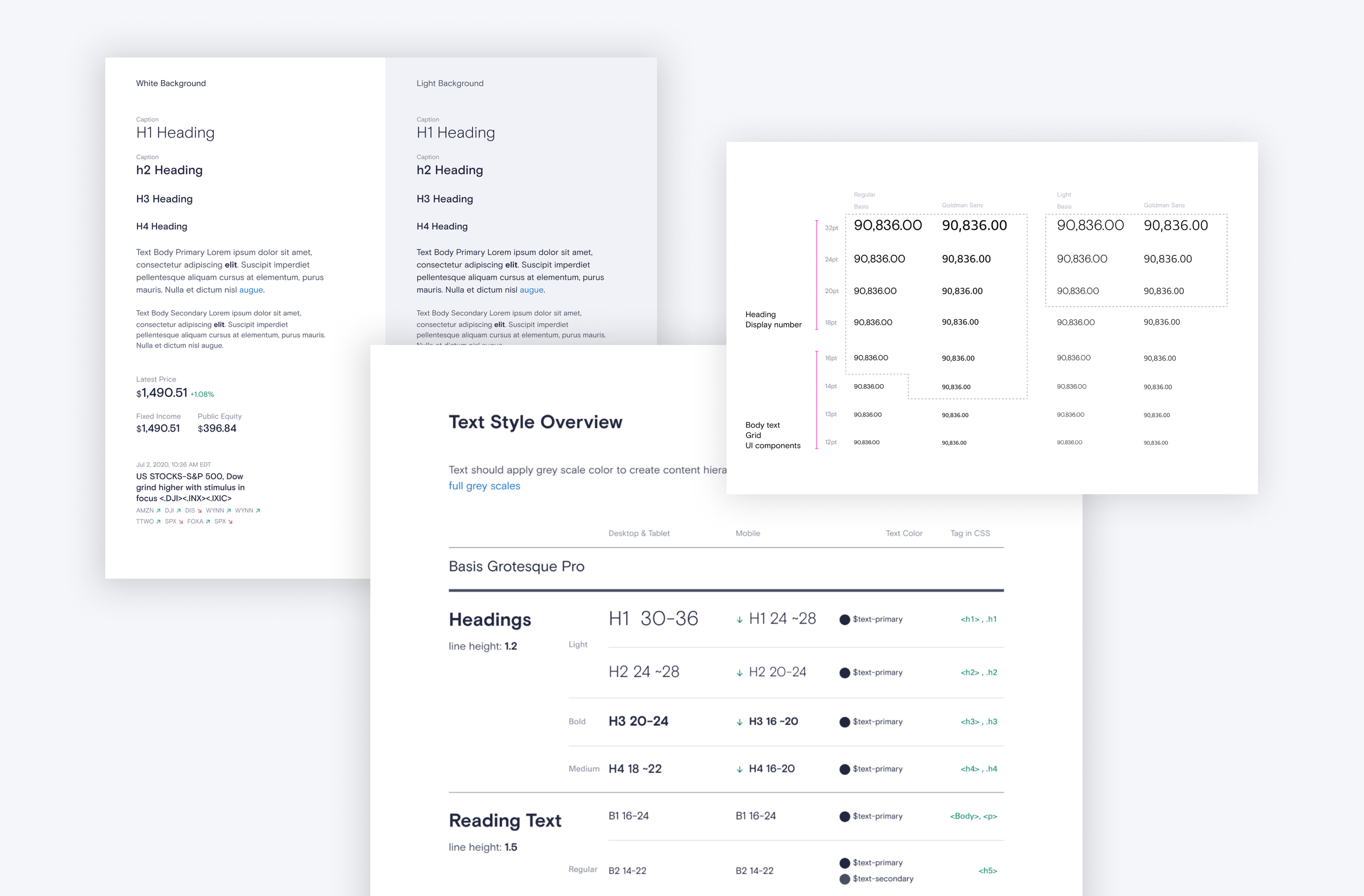
We refined foundational elements such as color and typography to improve hierarchy, readability, and consistency across the experience.
The updated foundation also considered accessibility and different interface environments, providing a stronger base for the component system.
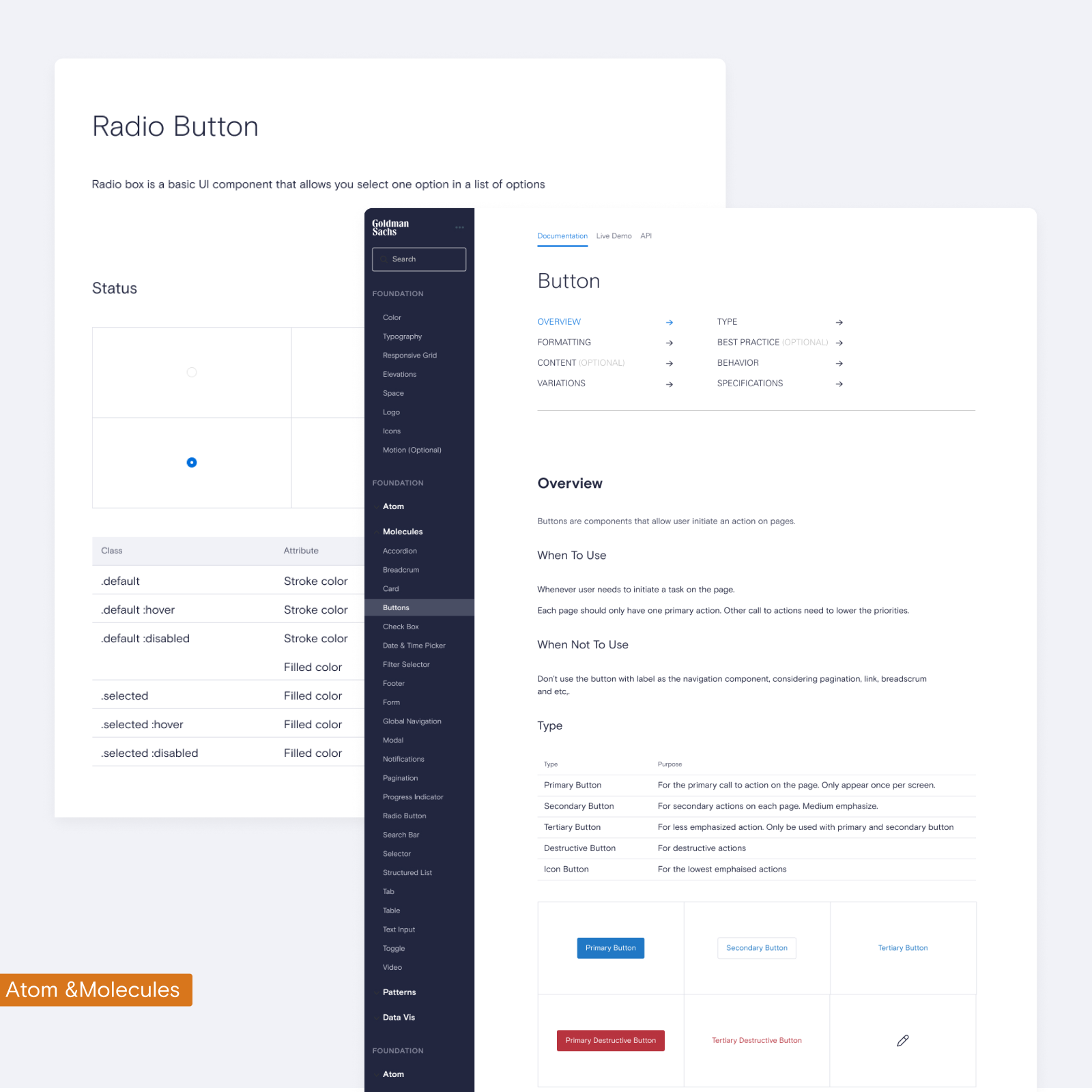
2.Building with Atomic Design
Using Atomic Design, foundational elements were organized into reusable components with consistent states, behaviors, and visual treatments.
This created a more structured system that could scale across different PWM products and use cases.
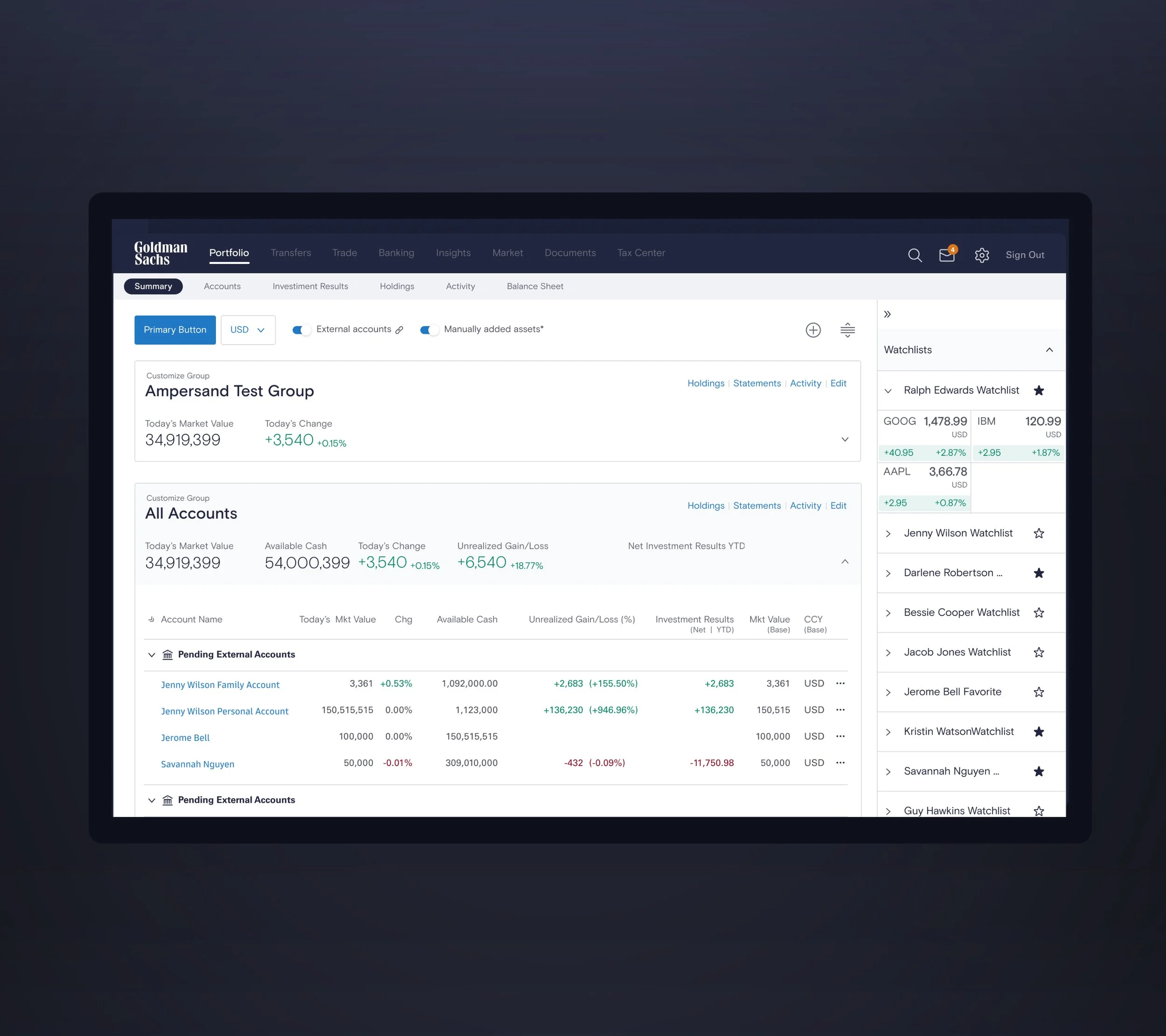
3.Scaling into product patterns
Components were then combined into larger patterns to support different PWM experiences and workflows.
Designing in context helped us address different content needs and edge cases while keeping the overall experience consistent.
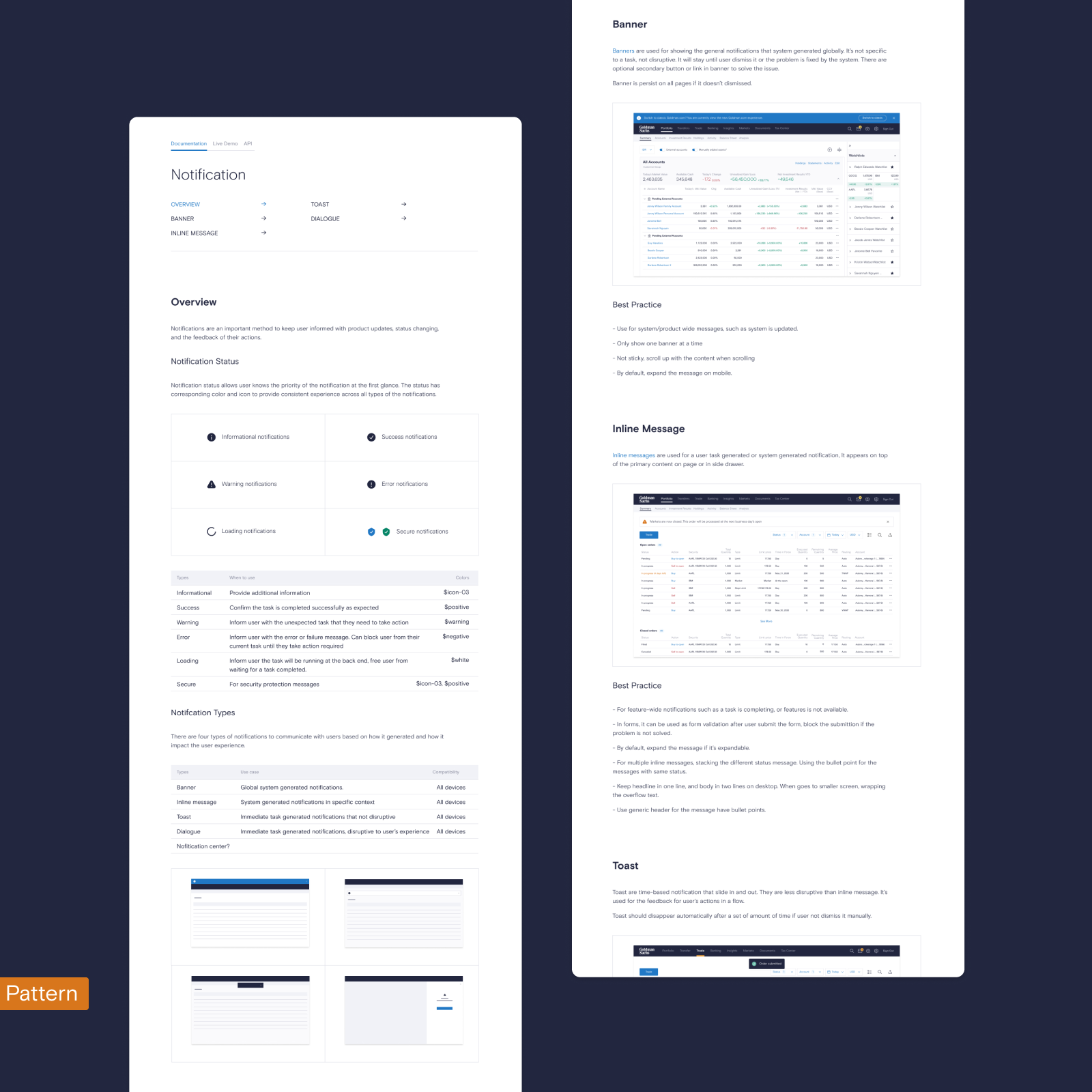
4.System documentation & guidelines
To ensure consistency across teams, we defined design system documentation and usage guidelines, including component behavior, usage rules, and design principles.
This helped align designers and developers, making the system easier to adopt and scale across different PWM products.
Final Outcome
From individual building blocks to one connected system.
The updated system introduced a more structured and scalable way to design across PWM products, creating stronger visual consistency and a clearer foundation for future experiences.